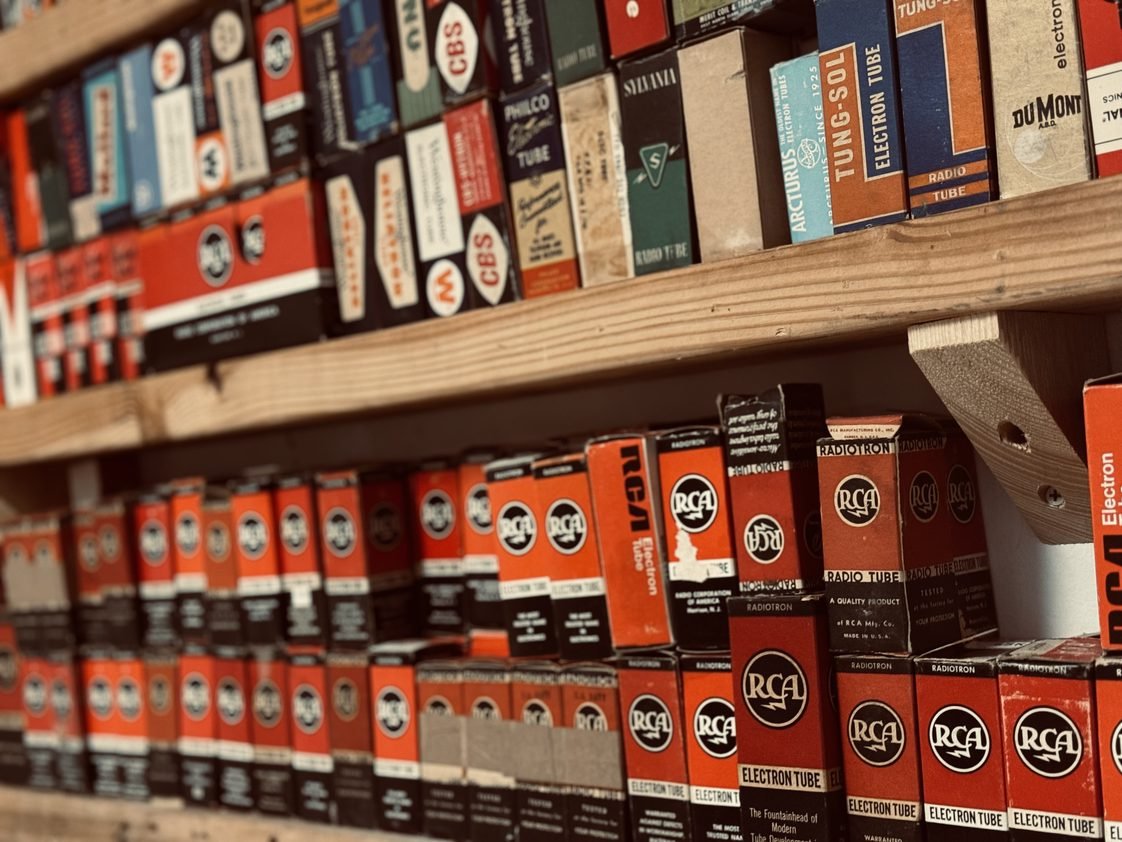


In the audio world, of course, we only delight in its awesome applications for amplifiers, preamps, dynamics processors and microphones, completely ignoring the fact that from the beginning of the 20th century for nearly 70 years, throughout the industrial age, vacuum tubes were at the heart of computers, industrial control systems, televisions, telephony, and virtually all data transmission from land, sea, space and air.
by J-Man
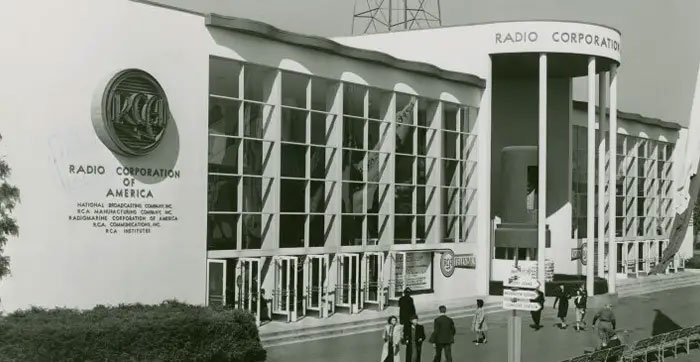
This week we want to celebrate RCA’s 105th birthday and pay tribute to one of the 20th century’s preeminent audio and communications company.
Everyone knows RCA tubes. Heck, I can remember RCA tube testers at the front of the supermarket when I was a kid. We all know that RCA Tubes are considered to be some of the finest sounding tubes you can get. They are highly sought after by music creators and audio enthusiasts everywhere, especially the legendary 12AX7 and 6V6 tubes. The compact, high-gain, dual-triode design of those tubes was key in changing the sound of popular music from the late 1940s onward. A leader in the science of vacuum tube technology, tubes were also a big profit-center for RCA. Beside being the nation’s leading manufacturer of vacuum tubes, their dominance in tube patents was so strong that it gave them the power to set prices in the US market. But there’s a lot more to RCA’s history than just tubes.
At the turn of 2020 I had been given a seemingly simple task: produce a backing track for my daughter’s upcoming singing competition. It was an enjoyable experience but, little did I know, I was about to stumble into a very frustrating issue that inadvertently plagues modern producers — it is something I call “Upgrade Hell”. This is the constant need to upgrade software to maintain compatibility across a vast production landscape. And, as I quickly learned, things don’t always work out the way you think.
We’re often asked if we recommend putting the “XYZ-brand” T4B into our Opto Comp and DA-3A.
The answer is emphatically, NO! I’ll explain:
In 2017, during the development of the Opto Comp, I dug in hard repairing and deconstructing vintage T4A and T4B optical cells from vintage LA-2A’s (btw, some of these units even used 3 photocells instead of 2; shows how much they cared about matching metering to the actual compression back then!). Every one of them, literally, was built in a way I hadn’t seen from any other manufacturer before. This research informed our decision to start making our own optical cells, in the same tradition as the originals.
We get this question a lot. Selecting transformers is a funny thing: You can get them ready-made, off the shelf, or they can be custom made to your spec. We often choose the latter, but the choice is more complex than that. Let’s dive in:
Myth #1: The one transformer brand that you’ve heard of is the “best” to use in EVERYTHING
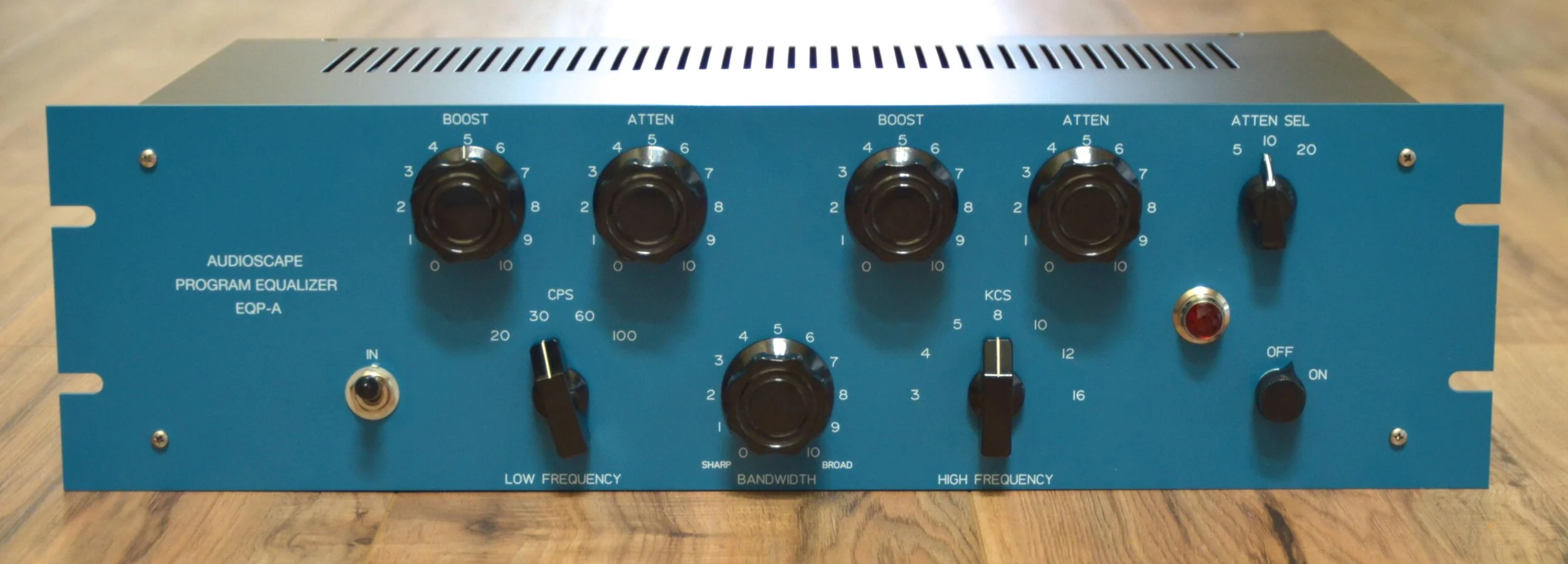
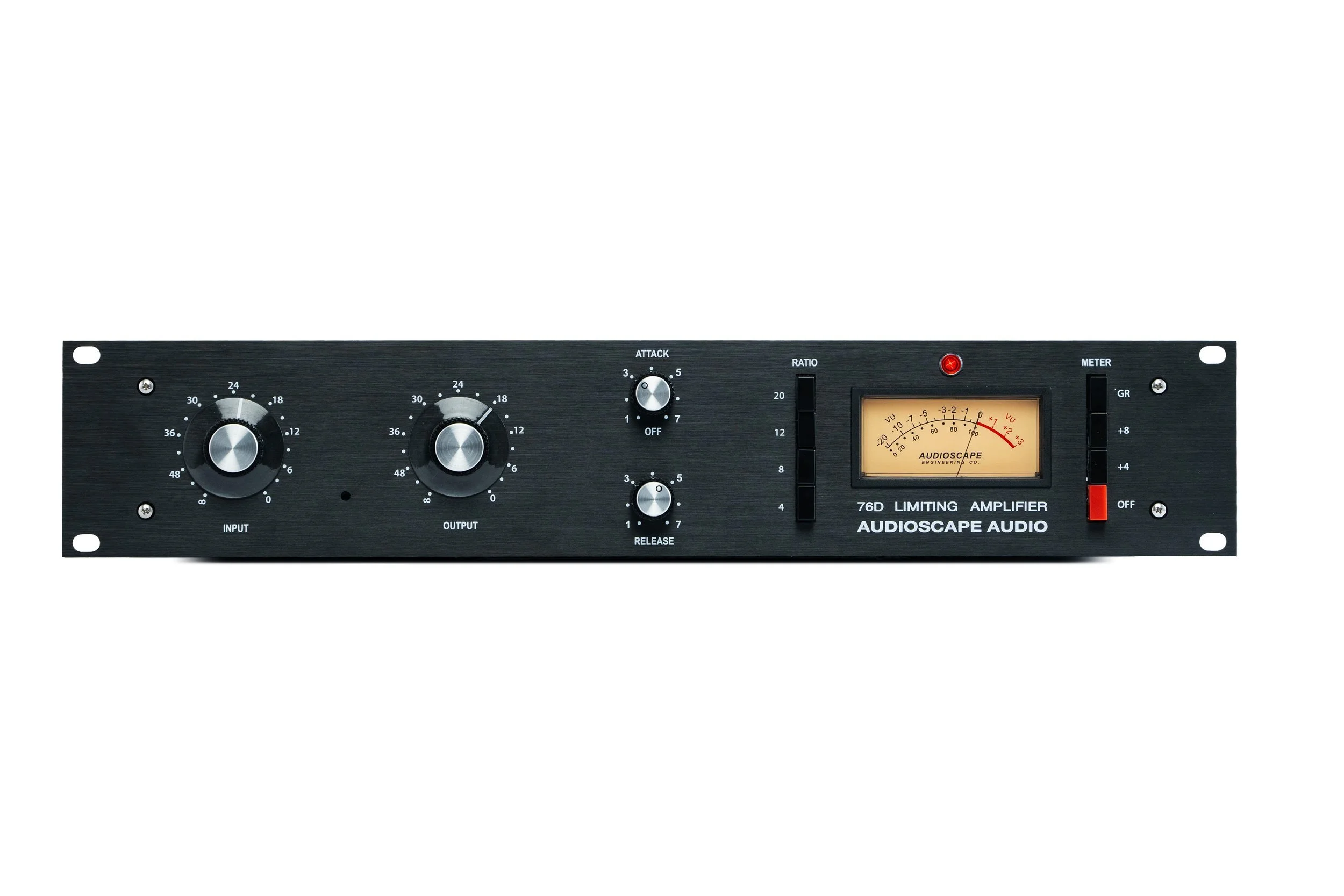
This is a question we’ve gotten a lot recently. Last week we discussed why we don’t sell all three revisions of the 76 style compressors in one box; this week we’ll discuss why we won’t offer an “all in one” approach with these legendary EQ circuits.
We’re stoked to share Tape Op’s review of the AS78. Big thanks to Brian Tarquin and Tape Op team!
Check out the full article at https://tapeop.com/reviews/gear/163/as78-dual-peak-limiter/
I’ll start this with a story: I remember years ago being on the road with my bandmates somewhere in the midwest. We were super young and had a shoestring budget. (At one point i saw our singer eating what i thought was a sandwich, nope, it was just a folded up piece of bread) Anyways, we literally spent 30 minutes arguing in a grocery store on whether to buy peanut butter and jelly in the same jar or both in separate jars. Little did I know this would be a life defining moment for me. I argued on the merits of buying the best peanut butter in its own jar and the best jelly in its respective jar so I will do the following now.