

Optical Compressors-A Brief History
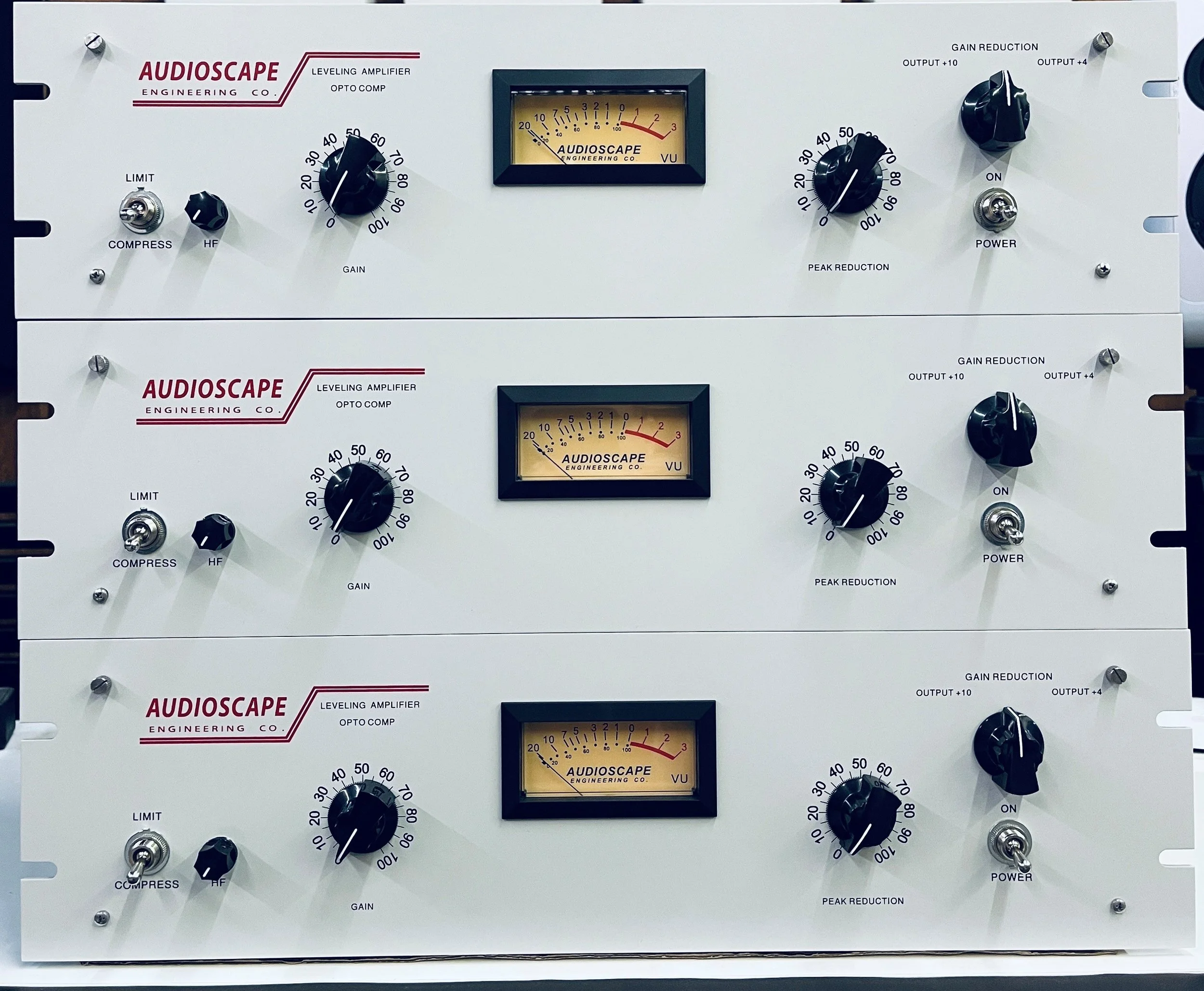
The AudioScape AS-2A Optical Compressor, based on the legendary original LA-2A design from the 1960s.
The Classic LA-2A & The History of Optical Compression
The word “iconic” gets thrown around pretty loosely in the world of vintage pro audio, where nearly every analog dynamics processor made before 1979 is attended to like a holy relic. The Teletronix® LA-2A Leveling Amplifier, however, has earned that title by appearing on thousands, perhaps tens of thousands, of iconic recordings, mostly on lead vocals, since its introduction in 1965.
Optical Compression: Leveling With Light
The LA-2A is by far the most famous example of optical compression, a unique approach to analog dynamics processing that converts electrical signals into light, which can then be “read” with an electroluminescent panel (i.e., photocell) and then used via optical attenuator to control dynamics in a natural, more program-dependant manner.
This brilliant technology was pioneered by Jim Lawrence, founder of the Teletronix Engineering Company. In the late 1950’s, Lawrence wanted to build an audio “leveler” to automatically ride gain during radio broadcasts. An electrical engineer by trade. he developed optical sensors as a way of controlling the dynamics of an incoming audio signal, turning the dynamics of that signal into light, and using a light-sensitive receptor to control the gain; the greater the incoming signal, the brighter the light, the greater the compression. This was the birth of the T4 electro-optical cell.
The First Opto Compressors: LA-1 & LA-2
The natural ballistics of the luminescence being generated created a very smooth compression, soft-knee with a moderate attack and a slow decay. The first model was called the LA-1. The second edition, the LA-2, found its way into the studios of RCA and CBS, and the last and most famous iteration, the LA-2A, was released in 1965, when Lawrence sold Teletronix to Babcock Electronics. Babcock eventually sold Teletronix, with all of its designs and patents, to Bill Putnam's Studio Electronics Corp. (eventually renamed UREI), who continued to produce the LA-2A until 1969, when it was replaced by the LA-3A.
LA-3A: Opto Compression Evolved
Bill Putnam’s company, UREI, introduced the LA-3A in 1969 as a replacement for the LA-2A. The new version was actually quite different in design and sound. While still using a version of Jim Lawrence’s original T4 electro-optical cell, now called the T4b, the solid-state LA-3A utilized components and topology borrowed from UREI’s successful 1176LN limiters.
Designed by Bill Putnam and Brad Plunkett, who engineered the 1176LN, the 3U high, half rack LA-3A had much different ballistics than its predecessor. Most noticeably, its attack was dynamic, unlike the LA-2A’s fixed attack, and reacted to large transients with much faster attack times than smaller transients. From 1969 until 1981, when it was discontinued, the LA-3A became ubiquitous in recording studios and radio stations throughout the world. Some have even suggested that the compressed sound of FM radio in the 1970’s, a sound that so many artists strive for today, was due in large part to the use of LA-3As across the stereo feed.
LA & Beyond
Of course, Teletronix (and later UREI) weren’t the only manufacturers to use this technology. Other famous opto compressors include the TubeTech CL1B and CL2A, Manley ELOP+, and the opto section of the Shadow Hills Mastering Compressor - all current-day studio classics.
There are also some oddballs and completely new designs. Altec’s quirky 1591A combines a mic preamp section with an optical compressor of its own design, using a now extremely rare photocell to produce compression. On the newer side, the Chandler Limited TG Opto Compressor is a fairly modern design not directly based on a unit from the EMI days, despite the TG branding.
The Future of Opto Compressors
No doubt we will see other manufacturers of vintage-style audio gear continue to use optical compression in their designs. And these compressors are more popular than ever in the software plugin realm, where you’d be hard pressed to find a company without an LA-2A model!
Do you have a favorite opto compressor? Know of any rare ones we missed? Feel free to let us know in the comments!
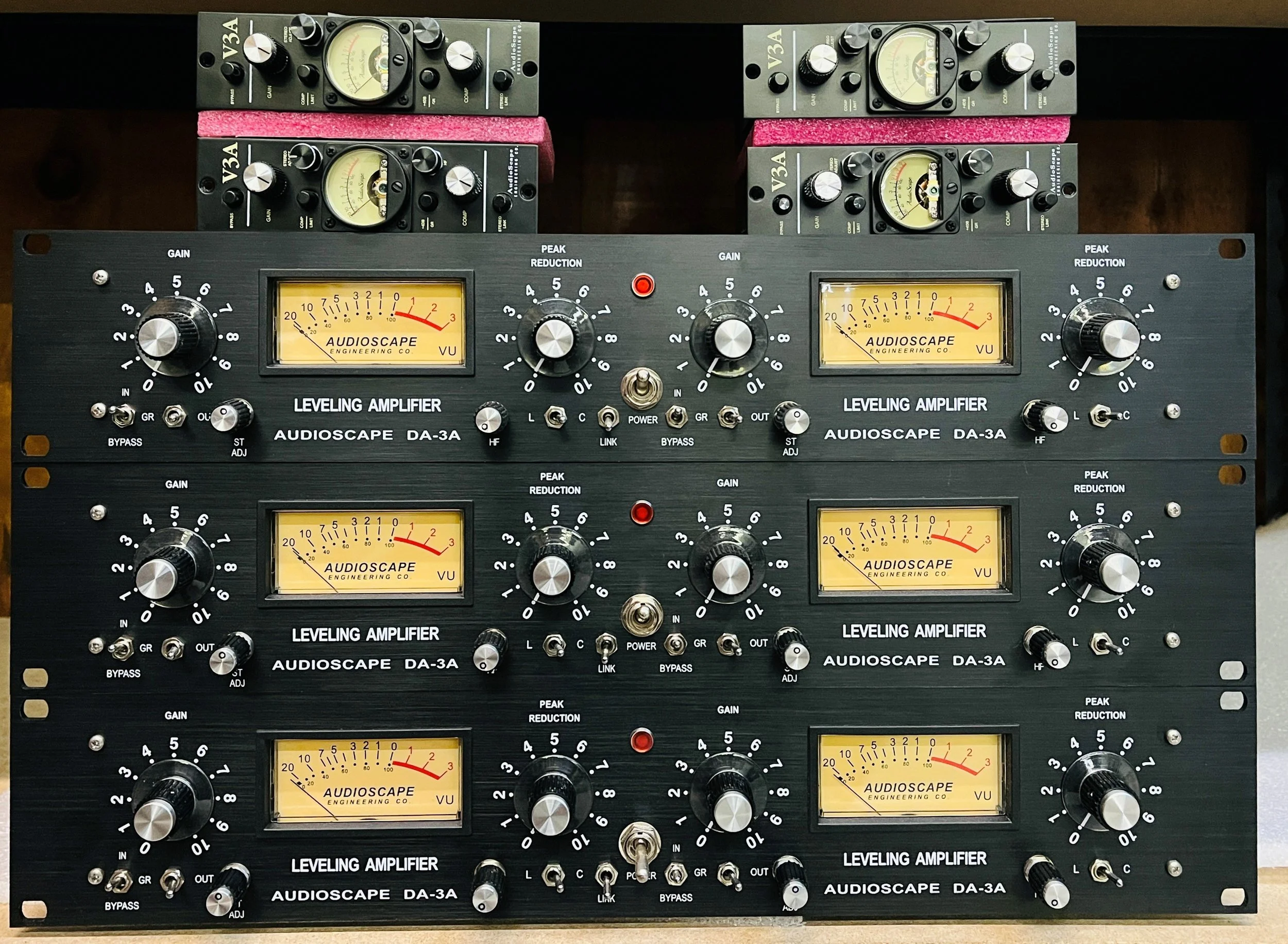
Bill Putnam’s company, UREI, introduced the LA-3A in 1969 as a replacement for the LA-2A. The new version was actually quite different in design and sound.
While still using a version of Jim Lawrence’s original T4 electro-optical cell, now called the T4b, the solid-state LA-3A utilized components and topology borrowed from UREI’s successful 1176LN limiters. Designed by Bill Putnam and Brad Plunkett, who engineered the 1176LN, the 3U high, half rack LA-3A had much different ballistics than its predecessor. Most noticeably, its attack was dynamic, unlike the LA-2A’s fixed attack, and reacted to large transients with much faster attack times than smaller transients. From 1969 until 1981, when it was discontinued, the LA-3A became ubiquitous in recording studios and radio stations throughout the world.
Some have even suggested that the compressed sound of FM radio in the 1970’s, a sound that so many artists strive for today, was due in large part to the use of LA-3As across the stereo feed.
