

Understanding Passive EQs: What's In A Line Amp?
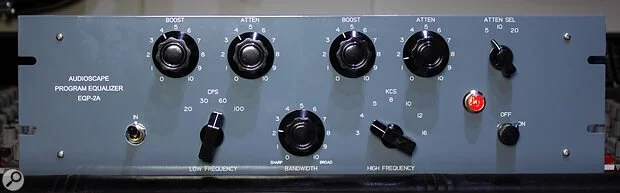
Our EQP-2A stereo passive EQ.
Demystifying THE ALL-IMPORTANT Line Amplifier
In today’s world with EQP-1A “clones” out there ranging from as low as $250 to upwards of $5k, it’s understandable to wonder what sets each build apart. The original circuit dates back to 1953, and passive EQ is an even older technology. Inductors can’t be *that* expensive…right?
Setting aside the other crucial elements - proper transformers, tubes, and vintage-accurate components - a huge part of what distinguishes recreations of this circuit (and its siblings) is the all-important line amplifier.
What’s In A Line Amp?
In a passive EQ, the line amp naturally plays a much bigger role in the sound of a unit than with other designs. Passive EQs famously achieve their “boost” effect not by increasing energy at a specific frequency, but rather by attenuating the surrounding frequencies and boosting the result to create a resonant peak. Needless to say, the quality of that amplifier matters a lot!
All amplifier circuits have limitations in bandwidth and headroom. In an EQP-style design, those limits are pushed even further by the requirements of a make-up gain amplifier compensating for the dozens of dB’s lost when introducing passive attenuation. (This is why we have kept our EQP true to the original design, not adding additional bands to the circuit, which can drastically change the character of the output amp by limiting bandwidth.) So getting the amp right is very important.. and it also means that different amplifier topologies will play a big role in the resulting sound of an EQP (or MEQ) style unit.
Passive EQ Tube Line Amps: Push-Pull vs. Class A
The classic EQP-1A line amp uses a push-pull configuration consisting of a 12AX7 and 12AU7 tube in the first and second gain stages, respectively. It’s an efficient, elegant-sounding tube amplifier with extraordinarily wide bandwidth, reproducing high and low frequencies effortlessly even when pushed to the maximum (as the EQP design encourages!). High-quality tubes are important here, and we swear by NOS made-in-USA options like RCA or GE - just like the original companies used in their builds going back to the 1950s. This amp is also known for a very pleasant harmonic distortion, which just tends to make things sound.. better. Just throw an EQP into bypass, drive the input, and you’ll see what we mean!
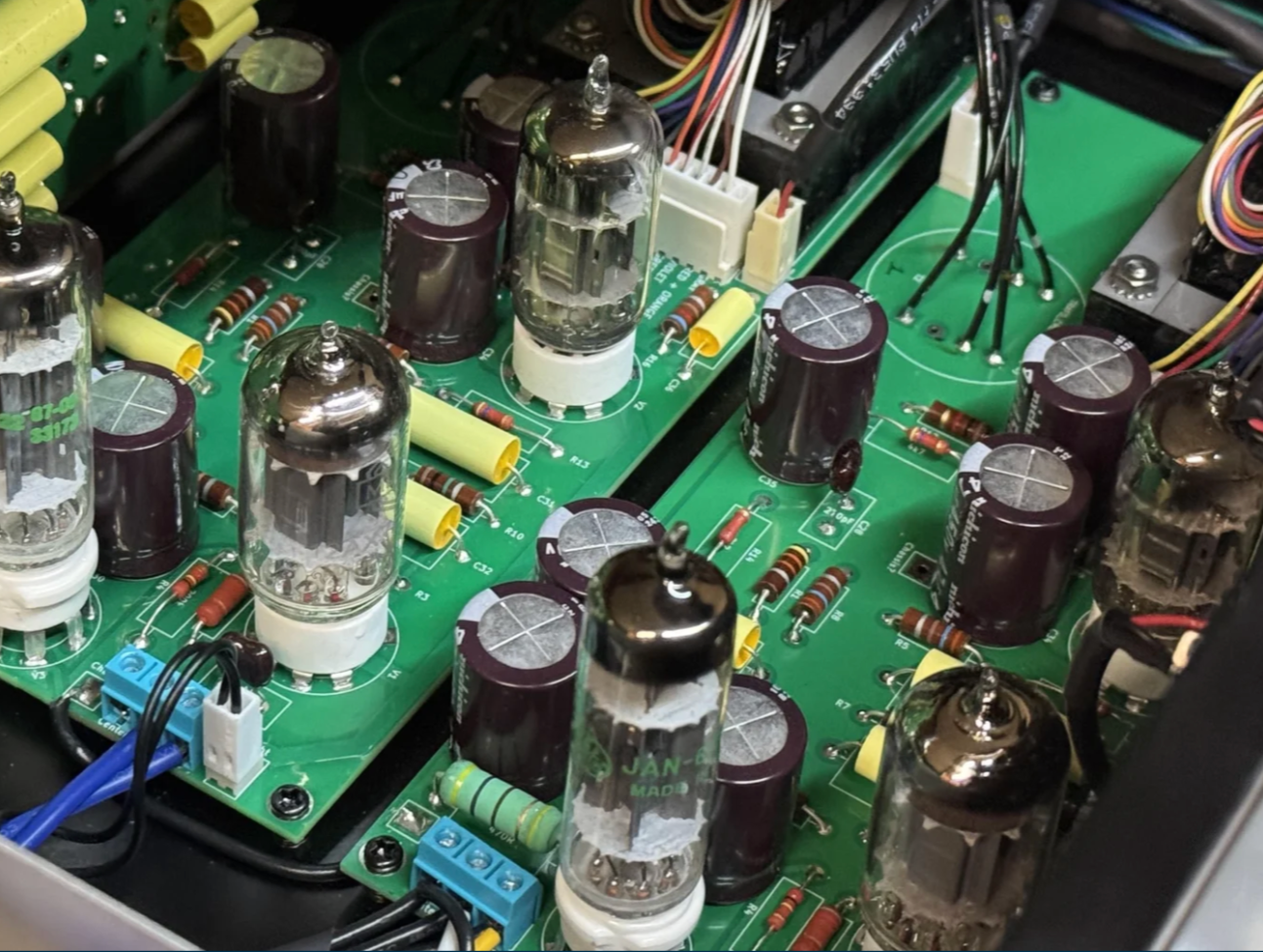
The all-tube push-pull EQP line amp, as featured in our stereo EQP-2A.
The MEQ-5, as we’ve written about previously, uses a different amplifier topology altogether – a unique single-ended Class A design, much more like you’d expect to find in a high-end audiophile setup than in a vintage studio EQ. This amp, also found in the 2U EQH-2, is less efficient than the EQP’s push-pull design, but the character is wonderful, with a remarkable transparency that speaks to the MEQ’s original design intent as a program-shaping counterpart to the EQP-1A. While some tube designs may impart a vintage “character” too heavy-handed for mix buss or mastering use, the MEQ‘s line amp makes it a perfect choice for this application – with the ability to push it harder and sculpt mids to the extremes on individual sources when desired, all without ever sounding harsh or unpleasant.
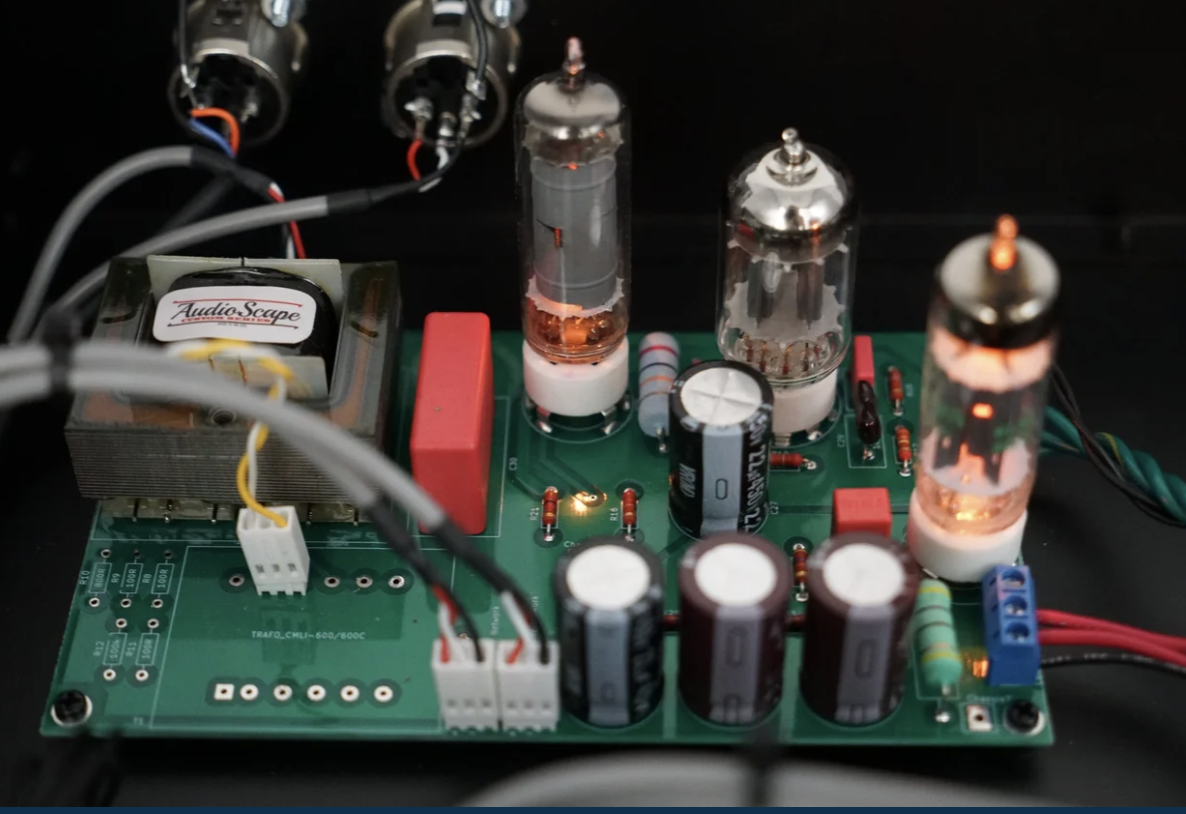
Our MEQ-A line amp, featuring NOS 6X4 rectifier, 12AX7, and 6AQ5 tubes.
Solid-State Passive EQ: Where Opamps Rule
Most modern EQ circuits use opamps in some form, but the first solid-state EQPs were a little more special than that. In the early 1970s, when designing a solid-state replacement for the tube amplifier in the EQP-1A, the engineers reached out to the recently founded Automated Processes, Inc®, in nearby New York City, who were quickly gaining a reputation as masters of high end transistorized audio equipment. Thus the solid-state EQP was born, using the famous 2520 discrete opamp in place of the old tube circuitry.
As fans of 2520-based circuits will know, this particular piece of audio wizardry is perfectly suited to the EQP. Shining especially in the low end, the punchy, responsive character of this opamp reproduces the EQP’s musical EQ curves beautifully, with a slightly faster and more defined feel to it.
While we’ve yet to introduce a solid-state EQ to our lineup, it’s not for no reason that our limited Emerald EQP-A and MEQ-A– which both feature an optional solid-state mode – make use of the excellent CA-0252 reproduction opamp from CAPI® in their output stages. There’s simply no better fit for this style of EQ!
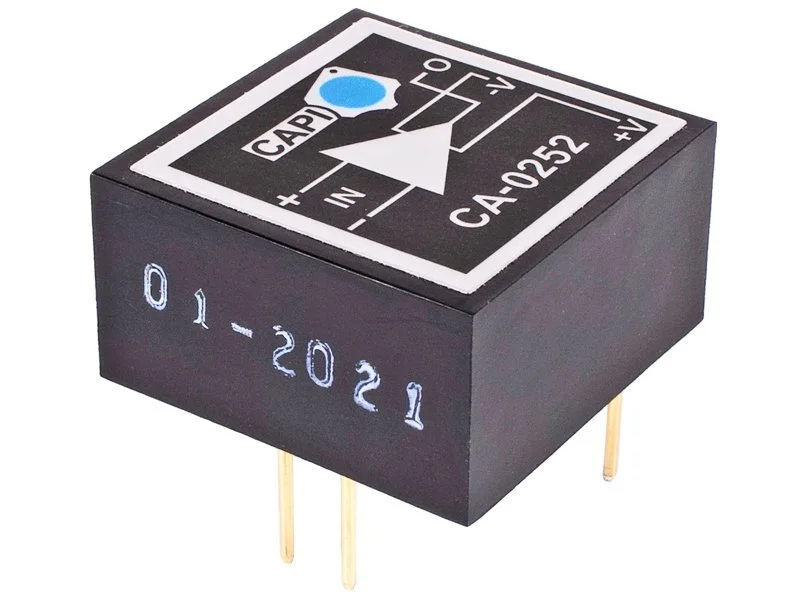
The outstanding CA-0252 Discrete Opamp from CAPI®.
*All trademarks are the property of their respective owners.